Hemostatic Forceps: Types, Uses, Parts and How to Use Them
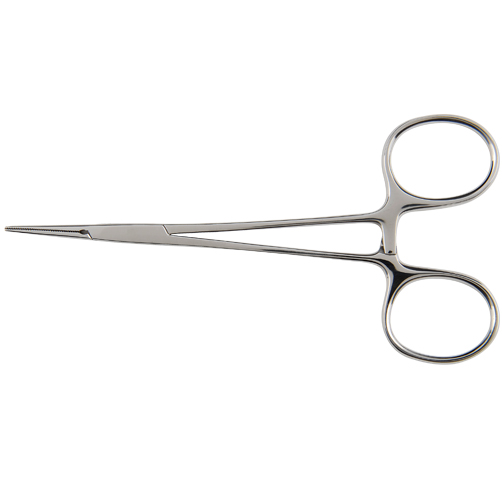
Hemostatic forceps, also called hemostats or artery forceps, are among the most common instruments in every operating room. They are locking clamps with a scissor-like handle, used to compress blood vessels and control bleeding during surgery. They are also used to hold tissue, grasp sutures and hold a ligature while a vessel is tied. In this guide you will learn what hemostatic forceps are, their parts, the main types, how to use them, how to care for them and how to choose good quality ones.
What Are Hemostatic Forceps?
The word "hemostatic" means stopping blood flow. A hemostatic forceps has two jaws that close on a vessel or tissue and lock in place with a ratchet, so the surgeon does not have to keep squeezing. Once the vessel is clamped, the surgeon can tie it off with a ligature or seal it with electrocautery, and then release the clamp. Because the jaws crush the tissue they hold, hemostats are normally used on tissue that will be tied off or removed, not on tissue that must stay undamaged.
The instrument is made in many sizes and shapes, but all hemostats share the same basic design. You can see our full range on the hemostatic forceps products page.
Parts of Hemostatic Forceps
- Jaws and tips: the working end that clamps the vessel. The inner surface usually has fine transverse serrations to grip securely.
- Box lock (joint): the pivot where the two halves are joined and which allows the jaws to open and close.
- Shanks: the section between the box lock and the finger rings. They carry the ratchet.
- Ratchet: the interlocking teeth on the shanks that lock the jaws closed at the chosen pressure.
- Finger rings (handles): the ring handles where the thumb and ring finger are placed.
Types of Hemostatic Forceps
The names usually come from the surgeons who designed them. The most common types are listed below. Sizes are approximate and vary slightly between manufacturers.
| Type | Typical size | Key feature | Common use |
|---|---|---|---|
| Halsted mosquito | About 5 in (12.5 cm) | Very fine, slender tips | Small vessels, delicate tissue, paediatric and plastic surgery |
| Kelly | About 5.5 in (14 cm) | Serrations on the front half of the jaws only | Medium vessels and clamping tissue |
| Crile | About 5.5 in (14 cm) | Serrations along the full jaw length | Medium vessels and general haemostasis |
| Rochester-Pean | About 6 to 10 in (16 to 26 cm) | Longer, heavier, full-length serrations | Larger vessels and thicker tissue pedicles |
| Kocher / Rochester-Ochsner | About 6 to 8 in (16 to 20 cm) | 1 x 2 teeth at the tips | Tough tissue, fascia and where a firm grip is needed |
| Mixter (right-angle) | Varies | Sharp right-angle jaw tips | Dissecting around vessels and passing a ligature behind a structure |
Mosquito forceps
Mosquito forceps are the smallest of the group and are ideal when precision matters. Read more in our article What Are Mosquito Forceps?
Kelly and Crile forceps
These two are very similar and are often confused. Kelly forceps are serrated only on the front part of the jaws, while Crile forceps are serrated along the entire length. Both are available straight or curved and are widely used for general clamping.
Rochester-Pean forceps
Pean forceps are longer and heavier and are used on larger vessels and thicker tissue, where a stronger clamp is needed.
Kocher forceps
Kocher forceps carry interlocking teeth at the tip, which give a firm hold and prevent slipping on tough tissue such as fascia. Because the teeth can damage tissue, they are not suited for delicate structures. See our comparison Kocher vs Allis forceps.
Straight vs Curved Hemostatic Forceps
- Straight forceps: convenient for superficial tissue and for holding drapes, sutures or other items.
- Curved forceps: give the surgeon a clear view of the tips and are generally preferred for clamping vessels, especially in deeper or confined areas.
Uses of Hemostatic Forceps
- Clamping blood vessels to stop or prevent bleeding.
- Holding a vessel while it is ligated (tied) or cauterized.
- Holding tissue pedicles that will be cut and removed.
- Grasping and pulling on suture ends or ligatures.
- Blunt dissection by gently opening the closed tips in tissue planes.
- Holding drapes, tubes and small items during a procedure.
- Use in veterinary surgery; see our veterinary instruments page.
How to Hold and Use Hemostats
- Hold correctly: place the thumb and ring finger in the rings and rest the index finger along the shank for control.
- Clamp only what is needed: when possible, clamp just the tip of the bleeding vessel to avoid crushing extra tissue.
- Close to the ratchet: squeeze until the jaws are secure and the ratchet locks.
- Ligate or cauterize: the vessel is tied or sealed while the clamp holds it.
- Release carefully: to open the ratchet, apply slight pressure to close further, then separate the rings with a gentle sideways movement.
Hemostats should be used by trained personnel following surgical protocols.
Hemostat vs Needle Holder vs Tissue Forceps
These instruments look alike but are designed for different jobs.
| Instrument | Main purpose | Jaw design |
|---|---|---|
| Hemostatic forceps | Clamp vessels and tissue | Longer, narrower jaws with transverse serrations |
| Needle holder | Hold suture needles | Short, strong jaws with fine cross-hatching or tungsten carbide inserts |
| Tissue forceps (for example Allis) | Hold or lift tissue | Teeth or smooth atraumatic tips, many without locking handles |
Using a hemostat in place of a needle holder is not recommended, because its serrations can damage needles and suture material. Learn more about Allis forceps in What Are Allis Tissue Forceps?
Cleaning and Care
- Open the ratchet fully and remove gross blood and tissue soon after use.
- Clean with a neutral or enzymatic detergent, manually with a soft brush or in an ultrasonic cleaner.
- Pay attention to the box lock and the serrated jaws, where debris collects.
- Rinse well, dry completely and lubricate the box lock with water-soluble instrument lubricant.
- Sterilize following the manufacturer's instructions, usually in a steam autoclave, and store dry.
Avoid soaking instruments in saline and avoid harsh chlorine-based cleaners, which can cause pitting and rust on stainless steel.
How to Choose Quality Hemostatic Forceps
- Material: medical-grade stainless steel with a smooth, uniform finish.
- Tip alignment: the tips should meet exactly when closed, with no gap or crossing.
- Box lock: should move smoothly without stiffness or looseness.
- Ratchet: must lock firmly and release easily without slipping.
- Right size and type: choose according to the procedure, vessel size and tissue.
- Reliable manufacturer: ask about quality standards such as ISO 13485 and about customisation and bulk supply.
Sialkot, Pakistan is one of the world's well-known hubs for surgical instrument manufacturing. Our team makes hemostatic forceps in Sialkot for hospitals, clinics, veterinarians and distributors. Contact us for bulk orders, private labelling and quotations.
Frequently Asked Questions
What are hemostatic forceps used for?
They are locking clamps used to compress blood vessels and control bleeding in surgery. They are also used to hold tissue, grasp sutures and hold a ligature while a vessel is tied.
What is the difference between mosquito, Kelly and Crile forceps?
Mosquito forceps are the smallest and finest, for small vessels. Kelly forceps are larger and serrated on the front part of the jaws only. Crile forceps are similar in size to Kelly but serrated along the full jaw length.
What is the difference between straight and curved hemostatic forceps?
Straight forceps suit superficial tissue and holding items. Curved forceps give a better view of the tips and are commonly preferred for clamping vessels in deeper or confined areas.
Can a hemostat be used as a needle holder?
It is not recommended. Needle holders have short, strong jaws designed to hold a needle without slipping, while hemostat serrations can damage needles and suture material.
How should hemostatic forceps be cleaned?
Open the ratchet, clean with a neutral or enzymatic detergent, rinse, dry thoroughly, lubricate the box lock and sterilize as per the manufacturer's instructions, usually in a steam autoclave.
Conclusion
Hemostatic forceps are simple instruments, but choosing the right type and size makes surgery safer and more efficient. Mosquito forceps suit fine work, Kelly and Crile forceps handle everyday clamping, Pean forceps manage larger tissue and Kocher forceps give a firm hold on tough tissue. Good quality stainless steel, accurate tip alignment and correct cleaning keep them reliable for years. To explore our range, visit our hemostatic forceps products or read our overview Surgical Instruments Names and Uses.
Note: This article is for general educational purposes and does not replace professional medical training or manufacturer instructions for use.