What Is the Difference Between Kelly and Mosquito Forceps?

Kelly forceps and mosquito forceps are two commonly used hemostatic surgical instruments designed for clamping blood vessels and controlling bleeding during medical procedures. Although both instruments serve similar purposes, they differ in size, design, and specific surgical applications. Understanding these differences is important for healthcare professionals when selecting the right instrument for a procedure.
Both Kelly and mosquito forceps are manufactured from high-quality stainless steel and include locking ratchet mechanisms that allow surgeons to maintain a firm grip during surgery. Their precise construction ensures reliability and efficiency in medical environments.
What Are Kelly Forceps?
Kelly Forceps are medium-sized hemostatic instruments commonly used to clamp larger blood vessels and tissues during surgical procedures. They feature partially serrated jaws and are available in both straight and curved designs.
Kelly forceps are widely used in general surgery, orthopedic procedures, and emergency treatments where stronger clamping force is required. Their larger size allows surgeons to handle thicker tissues and blood vessels effectively.
What Are Mosquito Forceps?
Mosquito Forceps are smaller and more delicate hemostatic instruments used for clamping tiny blood vessels and handling sensitive tissues. Their fine tips and lightweight design make them ideal for delicate surgical procedures requiring precision.
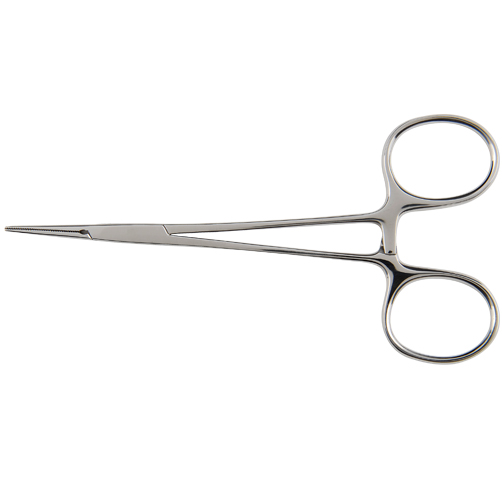
Mosquito forceps are commonly used in dental surgery, plastic surgery, minor operations, and veterinary procedures where careful tissue handling is necessary.

Main Differences Between Kelly and Mosquito Forceps
The main differences between Kelly and mosquito forceps include size, jaw design, and surgical applications.
Size:
Kelly forceps are larger and stronger, while mosquito forceps are smaller and more delicate.
Jaw Serration:
Kelly forceps usually have serrations on only part of the jaw, whereas mosquito forceps often have full serrations for finer grip control.
Application:
Kelly forceps are used for medium to large blood vessels, while mosquito forceps are designed for small vessels and delicate tissues.
Precision:
Mosquito forceps provide greater precision in delicate procedures, while Kelly forceps offer stronger clamping power.
Common Uses of Kelly Forceps
Kelly forceps are commonly used in:
- General surgery
- Orthopedic procedures
- Trauma surgery
- Emergency treatment
- Tissue clamping and dissection
Common Uses of Mosquito Forceps
Mosquito forceps are widely used in:
- Dental procedures
- Plastic surgery
- Minor surgical operations
- Veterinary surgery
- Delicate tissue handling
Features of High-Quality Hemostatic Forceps
Premium-quality Kelly and mosquito forceps are designed with several important features, including:
- Corrosion-resistant stainless steel
- Ratchet locking mechanism
- Ergonomic handle design
- Precise serrated jaws
- Smooth surface for sterilization
These features improve surgical performance, handling comfort, and long-term instrument durability.
Importance of Choosing the Right Instrument
Selecting the correct hemostatic forceps is essential for achieving precision, safety, and efficiency during surgery. Using the wrong size or type of forceps may reduce surgical accuracy and increase tissue damage.
Healthcare professionals choose Kelly or mosquito forceps based on the size of the blood vessels, tissue type, and complexity of the surgical procedure.
Conclusion
Kelly forceps and mosquito forceps are both essential surgical instruments used for controlling bleeding and handling tissues during medical procedures. While Kelly forceps are larger and designed for stronger clamping, mosquito forceps are smaller and ideal for delicate surgical work.
For high-quality Kelly forceps, mosquito forceps, and other professional surgical instruments, explore our complete range of precision medical tools designed for reliable surgical performance.